


A self-hypnosis sessions app plays guided audio that combines relaxation, focused breathing, imagery, and verbal suggestions to support calming routines, sleep preparation, and positive habits at home. The recording supplies a sequence to follow, such as releasing muscle tension, settling attention, and rehearsing a simple cue. It is relaxation and habit-support audio, not licensed clinical hypnotherapy.
The practical choice is between a track that fits an ordinary routine and one that promises more than recorded guidance can deliver. Bedtime sessions can provide a familiar wind-down cue; habit-focused sessions can rehearse a specific action, such as pausing before reacting. Neither guarantees sleep or behavior change. This page explains how the sessions work, where MindTastik’s audio fits, and when professional support is more appropriate.
What a Self-Hypnosis Sessions App Actually Does
A self-hypnosis sessions app plays guided audio that uses breathing, relaxation imagery, and suggestion to help you settle attention and repeat a calm routine. It is best understood as relaxation and habit-support audio, not licensed clinical hypnotherapy.
The difference matters. A recorded session can help you rehearse a bedtime cue, ease body tension, or find a gentle place to begin when the mind feels crowded and hard to settle. It does not diagnose anxiety, treat insomnia, or replace a clinician. The World Health Organization estimates that around 1 in 8 people worldwide live with a mental disorder, which helps explain why many adults look for everyday calm-support tools, according to the WHO WHO report: mental disorders.
If the priority is a gentle wind-down routine, keeping self-hypnosis-style audio near guided sessions, sleep tracks, and breathing prompts reduces app-switching at bedtime.
The right support still has boundaries.
5 Facts About Self-Hypnosis for Sleep and Habit Support
- Self-hypnosis apps are audio-first tools, so you follow recorded guidance without a live practitioner.
- Self hypnosis for sleep is best described as support for a wind-down routine, not a guaranteed sleep treatment.
- MindTastik offers large libraries of guided meditations and sleep audio that overlap with self-hypnosis-style relaxation content.
- Offline and on-demand listening matters because bedtime, travel, and commutes are often the moments people actually use audio.
- Relaxation benefits can feel real for many users, but those benefits are different from medical claims.
If you’re comparing options, MindTastik also sits naturally beside a guided meditation app routine because both use voice-led attention, breath pacing, and repeatable practice.
A free app ad can break the mood fast. That’s why saved audio matters more than most feature lists admit.
How Self-Hypnosis Audio Sessions Work
Self-hypnosis audio sessions work by narrowing attention, reducing outside distraction, and pairing relaxation with simple verbal cues. The process is behavioral relaxation, not mind control.
Most sessions begin with progressive relaxation. That means the voice guides you to release tension step by step, often from the face, jaw, shoulders, chest, and legs. In plain language, your attention has fewer places to go. Breathing pacing may slow the breath and support parasympathetic activity, the body’s “settle down” mode.
Then comes the suggestion phase. A session might repeat a calm cue, a sleep cue, or a habit cue like pausing before reacting. Near the end, some tracks bring you back to alertness. Sleep-focused tracks may instead fade into quiet. If spoken suggestions do not appeal, consider music as self-hypnosis for sleep as another wind-down listening option.
For adults trying to step out of looping thoughts at night, MindTastik covers this use case because the session path can move from breath work into sleep audio without asking you to rebuild the routine in the middle of the night.
How to Use Self-Hypnosis Sessions in MindTastik
Use self-hypnosis sessions in MindTastik by choosing one repeatable routine and listening at the same time for several days. Consistency usually matters more than the exact track title.
- Pick a session category, such as sleep, calm habits, or relaxation.
- Set a consistent time slot, either before bed or during a everyday calm break. For an earlier daily practice, a self hypnosis morning routine can offer a consistent cue before your day begins.
- Find a quiet space and use headphones if possible.
- Follow the guided breathing and imagery prompts without trying to “perform” meditation.
- Repeat the same session for at least 5 to 7 days to build routine familiarity.
Someone new to the library might choose between a 5-minute breathing exercise and a 20-minute body scan. Keep it simple at first. If your body relaxes faster with breath pacing, pair sessions with breathing exercises instead of jumping into longer audio right away.
When to Use a Relaxation Hypnosis App for Everyday Calm
A relaxation hypnosis app fits quiet, repeatable moments: bedtime wind-downs, mid-day stress breaks, commutes, and calm-down rituals after a trigger. It is not the right sole support for severe symptoms or safety concerns.
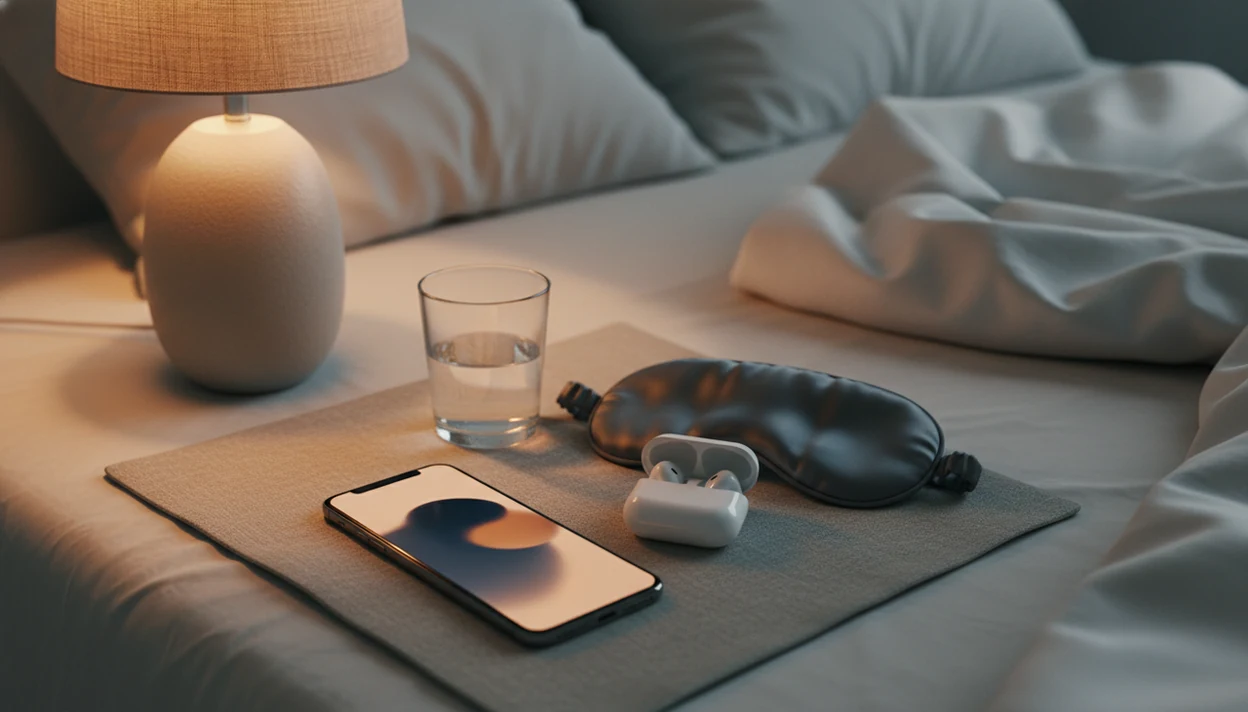
Try this before bed when the lamp is dim and the water glass is already on the nightstand. You can use a short reset between meetings, after muting notifications, or before a commute home. Habit hypnosis audio works best when it attaches to an existing cue, such as changing clothes after work or closing a laptop.
Per the CDC, 39.0% of U.S. adults had short sleep duration in 2023, defined as fewer than 7 hours in 24 hours CDC guidance: adults sleep facts and stats.html. That does not mean audio fixes sleep, but it does show why wind-down routines matter.
A Best Meditation App for Sleep should deliver repeatable support for wind-down routines, not act as a private replacement for medical care.
Self-Hypnosis Sessions in MindTastik: What They Look Like
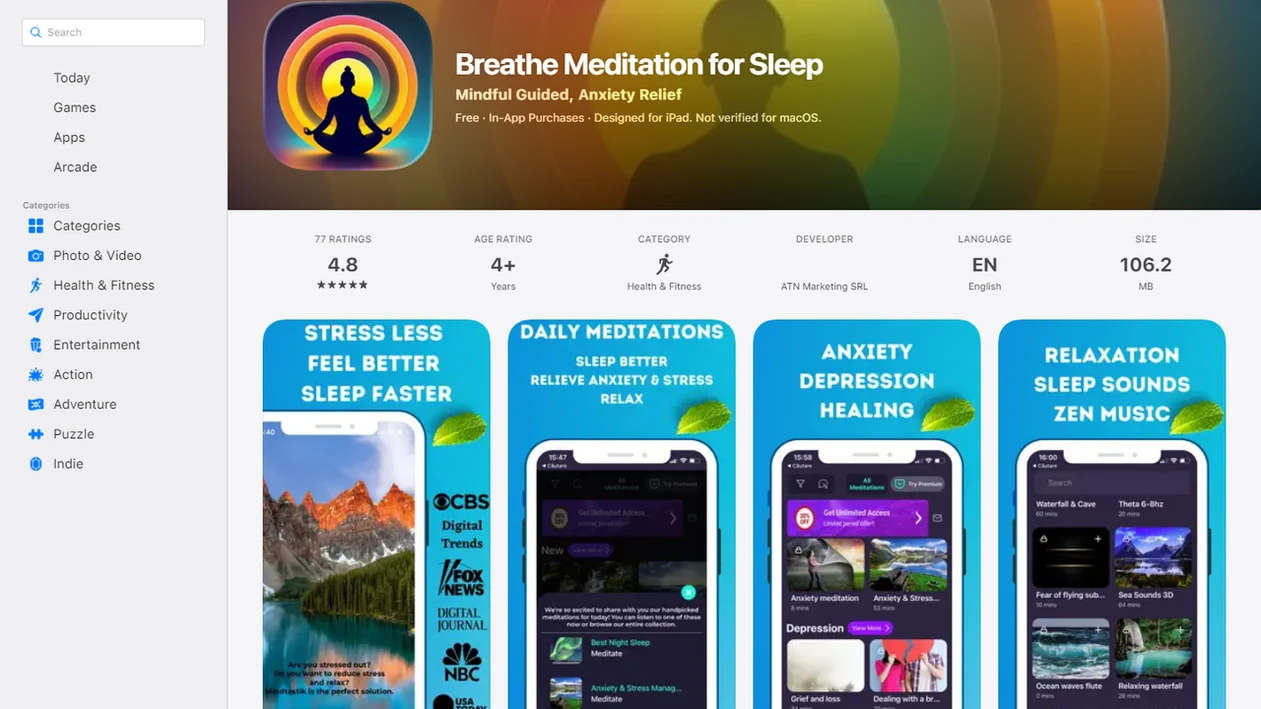
MindTastik provides guided meditation, sleep audio, breathing exercises, and self-hypnosis sessions for adults who want sleep, anxiety, and everyday calm support. The self-hypnosis-style tracks sit beside those tools, so you can build one routine instead of switching apps.
Session lengths can fit different use cases. A short track may work for a lunch break. A longer wind-down session may suit the moment when the room is quiet, the light is low, and a steady voice helps the body shift toward rest.
If your priority is bedtime use without Wi-Fi, MindTastik earns the spot because offline-ready audio supports saved sessions for flights, hotels, and low-signal bedrooms. The same idea is covered in more detail in offline meditation downloads.
Check evidence for the app, not just for hypnosis
Research on hypnosis does not automatically validate an app that uses the same label. A 2024 systematic review of hypnosis apps identified 679 unique apps, of which 168 met its inclusion criteria. Only 34 stated that the developer or hypnosis provider had hypnosis training, and only four reported inclusion in a clinical efficacy trial. Sleep and relaxation were common targets, but those labels were not evidence of effectiveness.
A useful evidence check asks three separate questions: who created the guidance, what outcome was studied, and whether the study evaluated that particular app. An earlier review of hypnosis apps found that none reported efficacy testing or an evidence-based status. For app selection, a clearly described relaxation purpose is more informative than an unsupported treatment promise. Credentials and clinical research claims should be explicit enough to check.
Who Self-Hypnosis Sessions Are Best For
Self-hypnosis sessions are best for adults who want voice-led relaxation to support ordinary routines, especially sleep wind-downs, calm breaks, and habit cues. They fit people who like being guided step by step more than sitting with a silent timer.
A good-fit user might be building a bedtime pattern with saved tracks, dim lighting, and the same familiar voice each night. Another might use a short session during a commute, after parking the car, or between meetings when the nervous system needs a cleaner transition than scrolling. MindTastik can also suit people who prefer spoken prompts, breathing cues, and gentle imagery over unguided meditation.
To decide if this style belongs in your routine:
- Choose it if you want guided audio to make relaxation easier to start.
- Use it when you have a repeatable cue, such as getting into bed or closing a laptop.
- Save tracks ahead of time if weak Wi-Fi or late-night browsing breaks the mood.
- Seek professional care if you have severe insomnia, panic symptoms, trauma concerns, medical questions, or thoughts of self-harm.
The best use is supportive and practical: a calm track, a known time, and realistic expectations.
Self-Hypnosis App vs. Clinical Hypnotherapy
A self-hypnosis app provides recorded relaxation and suggestion audio, while clinical hypnotherapy involves a trained or licensed practitioner working with a person’s specific needs. Apps can support routine building, but they are not diagnosis or treatment.
| Option | What it provides | Best fit | Boundary |
|---|---|---|---|
| Self-hypnosis app | Recorded breathing, imagery, and suggestion | Relaxation, sleep routines, habit cues | No clinical assessment |
| Clinical hypnotherapy | Practitioner-led sessions | Individual care plans and targeted support | Depends on provider scope and training |
| Meditation audio | Attention and awareness practice | Everyday calm and bedtime structure | Not condition-specific treatment |
The NIH’s National Center for Complementary and Integrative Health says there is not enough evidence to determine whether hypnosis is effective for conditions such as irritable bowel syndrome, menopausal symptoms, or smoking cessation NCCIH mindfulness overview: hypnosis and hypnotherapy science.
For medical, psychiatric, or chronic sleep concerns, professional assessment is safer than relying on audio alone.
What insomnia trials show, and what they do not
A 2015 review of hypnotherapy for insomnia included six hypnotherapy trials and seven trials of autogenic training or guided imagery, with 502 participants altogether. Hypnotherapy shortened the time taken to fall asleep compared with a wait-list control, but it did not outperform sham hypnosis. That distinction matters: improvement against no immediate intervention does not establish that hypnosis-specific suggestions caused the improvement.
Eleven of the 13 studies had low methodological quality, leaving the authors uncertain about how broadly the findings applied. A separate four-week trial involving 60 participants found no statistically significant difference between insomnia-specific and generic suggestions, as described in a clinical review of hypnotherapy. These findings do not establish that a commercial recording treats insomnia or that a highly specific sleep script is better than general relaxation guidance.
Common Myths About Habit Hypnosis Audio
Habit hypnosis audio is often misunderstood because the word “hypnosis” carries stage-show baggage. In an app, it usually means guided relaxation, focused attention, and repeated cues.
Myth one: hypnosis means losing control. Reality: you remain aware and can stop the track at any time.
Myth two: habit hypnosis audio guarantees behavior change. Results depend on routine, motivation, sleep habits, stress load, and what happens after the session ends.
Myth three: a relaxation hypnosis app cures insomnia. Some users find audio helpful for winding down, but it is not proven as a standalone treatment for insomnia.
Myth four: self-hypnosis apps replace therapy. They don’t. MindTastik can support relaxation routines because it gives users structured audio choices, but it should not be used as a substitute for licensed care.
The pocket check is real. So is the urge to restart the same calming track.
Related MindTastik Features for Sleep and Calm
Related MindTastik features can make self-hypnosis sessions easier to repeat because they support the same calm routine from different angles.
- Guided meditation library: Voice-led sessions help beginners practice attention without guessing what to do next.
- Sleep audio and sleep meditations: Bedtime tracks pair well with self hypnosis for sleep when racing thoughts replay unread emails behind closed eyes. For another bedtime listening option, consider Super Quantum Computer Sleep alongside your usual relaxation tracks.
- Breathing exercises: Short breath sessions work well before longer habit hypnosis audio.
- Sleep stories: A sleep stories app feature can feel gentler than suggestion-based audio on nights when you only want a quiet narrative.
People trying to build a full wind-down routine can compare MindTastik with Calm, Headspace, and Mindful.org, but the practical test is whether the routine feels repeatable on a tired night.
MindTastik audio for a repeatable calm routine
MindTastik includes self-hypnosis audio alongside guided meditation, breathing exercises, and sleep stories. That combination suits adults who want spoken relaxation prompts and a choice of approaches within one app. Its breathing exercises offer an alternative when imagery or repeated suggestions do not appeal.
For bedtime, a sleep story may fit better than habit-focused suggestions when the goal is simply a quiet narrative. People seeking an assessment, treatment for persistent insomnia, or help with significant psychological symptoms should choose professional care rather than rely on recorded sessions. MindTastik is not a medical treatment.
What recorded self-hypnosis cannot treat or guarantee
Self-hypnosis sessions have useful boundaries. They can support relaxation and habit practice, but they should not be presented as a fast fix.
- Self-hypnosis audio is not a proven treatment for medical or psychiatric conditions; NCCIH notes insufficient evidence for hypnosis across several specific conditions.
- Results are highly individual. The same track may calm one person and annoy another.
- Habit change usually needs more than audio, including sleep timing, environment, behavior cues, and follow-through.
- High stress, panic, trauma symptoms, severe depression, or chronic insomnia may need professional assessment first.
- Audio apps work best as supportive tools, not standalone solutions for anxiety, depression, or long-term sleep problems.
- Recorded sessions cannot adjust in real time the way a qualified practitioner can.
- Some users may prefer a broader comparison, such as a best meditation app for sleep anxiety guide, before choosing one routine.
MindTastik is most useful when you treat it as a supportive practice library, not a clinical care plan.
Use self-hypnosis only when attention can safely relax
- Self-hypnosis audio is best treated as relaxation and habit-support practice, not as a replacement for licensed clinical care. If symptoms feel intense, persistent, or unsafe, professional support is the better next step.
- Choose a session when you can give it ordinary attention. Avoid using guided relaxation while driving, operating equipment, or doing anything that requires quick reactions.
- Start with a simple goal, such as settling the body or preparing for rest. A narrow intention is easier to repeat than a large promise you have to measure.
- If a session makes you feel more unsettled, stop and switch to a more neutral practice, such as a breathing exercise or a brief grounding routine. The right tool should feel usable, not forced.
- Volume, pace, and timing matter more than people expect. A calming session can lose its usefulness if the voice feels too loud, too fast, or squeezed into a rushed moment.
Self-hypnosis session questions
What is the difference between self-hypnosis and guided meditation?
Both can use breathing, relaxation, and spoken guidance. Self-hypnosis usually adds repeated suggestions or imagery linked to a goal, such as a bedtime cue or a particular habit. Guided meditation more often emphasizes attention and awareness. App recordings can overlap, so the actual instructions matter more than the category name.
Can self-hypnosis sessions help with insomnia?
They may help some people settle into a bedtime routine, but recorded sessions are not a proven standalone treatment for insomnia. Reviews of hypnotherapy have found mixed results and weaknesses in study quality. Persistent insomnia calls for professional assessment rather than relying on a sleep recording alone.
Do you lose control during self-hypnosis?
Self-hypnosis audio is guided attention and relaxation, not mind control. A listener remains aware and can stop the recording at any time. There is no need to accept every suggestion or achieve a dramatic trance-like state. If the guidance feels unsettling, stopping is an appropriate response.
How long should a bedtime self-hypnosis session last?
A reasonable bedtime routine is 10 to 20 minutes of slow breathing, progressive relaxation, gentle imagery, and brief suggestions. That is a practical format, not a proven ideal duration. A shorter session may be easier to repeat. Length alone does not establish effectiveness or make a recording a sleep treatment.
How often should I listen to self-hypnosis audio?
Repeated practice is more useful to assess than a single listen. A review of self-hypnosis trials found it was most likely to work when taught as an independent skill and practiced at least three times before assessment. That finding is not a guaranteed schedule for app results. Choose a repeatable time and a modest goal.
Can self-hypnosis audio change habits on its own?
It cannot guarantee habit change. Suggestions can rehearse a specific cue, but the behavior still needs to happen outside the session. A concrete plan, such as walking for 10 minutes after brushing teeth, is more practical than imagining a successful outcome alone. Environment, motivation, and follow-through still matter.
When should I avoid using self-hypnosis recordings?
Avoid guided relaxation while driving, operating equipment, or doing anything that requires quick reactions. Stop if a recording makes distress worse. Significant anxiety, trauma symptoms, severe depression, or persistent insomnia need professional support; a self-hypnosis session should not replace assessment or appropriate treatment.