
Meditation for Moms: A Gentle Wind-Down After a Full Day
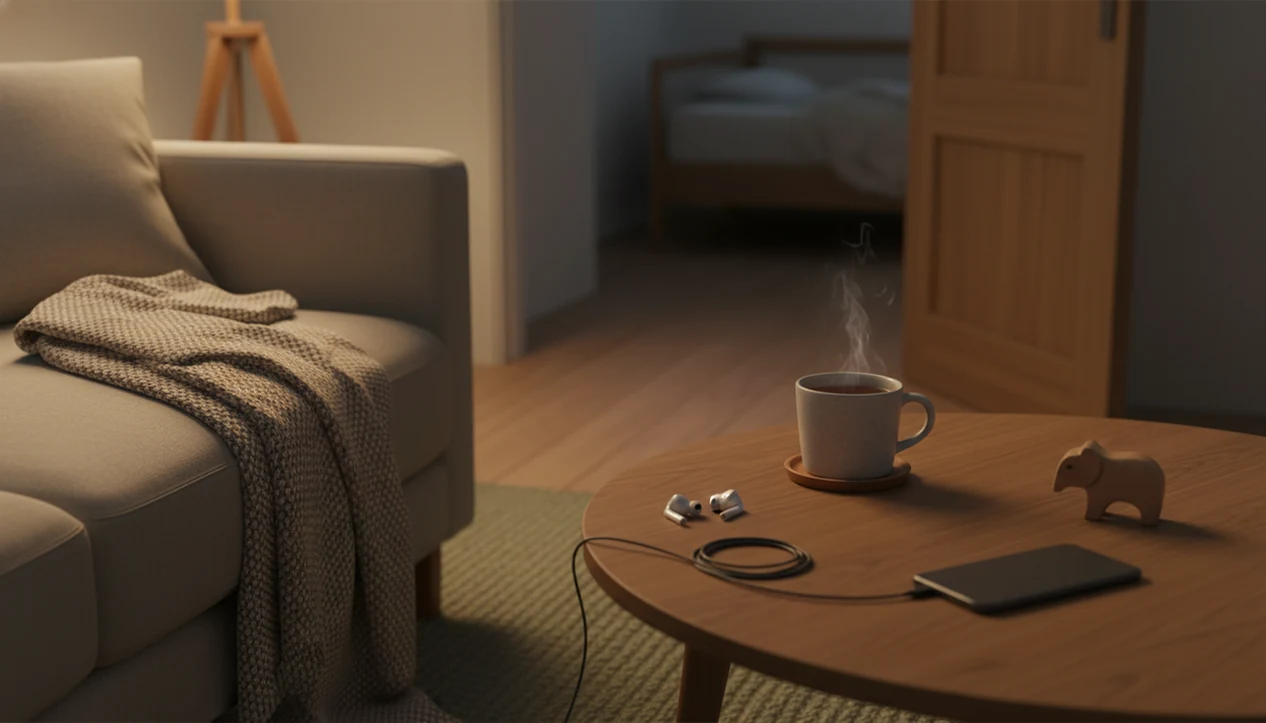


Meditation for moms is a short wind-down practice that uses guided audio, breathing, or a body scan to settle after caregiving, work, noise, and mental load. A session can fit into 3 to 10 minutes, without a silent room or a long stretch of privacy. Common openings include after children’s bedtime, during a feeding break, in bed, or in a parked car before returning home.
MindTastik offers guided meditation, sleep audio, breathing exercises, and self-hypnosis sessions for adults seeking wellness support for rest, anxiety, and everyday calm. These are options for a brief evening reset, not medical treatment. Meditation can support stress and sleep routines, but persistent insomnia, depression, severe anxiety, or postpartum concerns need care beyond an app.
The essentials
- Moms do not need a silent room or 30 minutes; short guided sessions can still support calmer evenings.
- The best time to start is usually after kids’ bedtime, during a feeding break, in bed, or in a parked car before re-entering the house.
- Meditation can support stress and sleep routines, but it should not replace care for persistent insomnia, depression, severe anxiety, or postpartum concerns.
Why meditation for moms fits the evening caregiving crash
Meditation for moms fits the evening crash because caregiving keeps the brain switching tasks long after the house gets quiet. A short guided session can act as a bridge from “everyone needs me” mode into rest mode.
The mental load is not just one big stressor. It is snack requests, school forms, work messages, laundry timing, bedtime negotiations, and the sound of someone calling from the hallway after lights out. By 9:47 p.m., many moms are exhausted but wired.
That is the real use case.
A calm voice, slower breathing, or a simple body scan gives the mind one place to land. MindTastik works well in this narrow window because the session can start before motivation disappears. For moms, a 5-minute reset is often easier than a full wellness routine because the barrier is low and the next step is obvious.
Five meditation for moms facts worth knowing first
- Short sessions can count. Five to 10 minutes of guided meditation or breathing can be useful when repeated consistently, especially for busy caregiving schedules.
- Mindfulness has real but limited evidence. A 2014 JAMA Internal Medicine meta-analysis of 47 randomized trials found moderate improvements in anxiety and depression and small improvements in stress compared with controls: JAMA Internal Medicine study: 1809754
- Apps can reduce friction. App-guided meditation gives busy mothers on-demand access during bedtime, lunch breaks, or the 2:13 a.m. lock-screen check.
- Consistency matters more than flawless focus. For tired parents, returning attention 20 times is still practice. The goal is not a blank mind.
- Meditation is supportive wellness. It may help with stress and sleep routines, but persistent insomnia, low mood, panic, or postpartum concerns deserve professional care.
Best Meditation App for Sleep support should deliver gentle structure, not a diagnosis or a promise that one track will fix a hard season.
What parent-specific research shows, and what it does not
Research on parents is more relevant here than studies of meditation in adults generally, but its findings are mixed. A 2021 review of 20 randomized trials involving 1,003 parents found moderate improvements in general stress, internalizing psychological symptoms, and wellbeing. Improvements in parenting stress and parenting behavior were smaller. These results concern mindfulness-based programs, not proof that a single short bedtime recording produces the same benefits. For families with older children, learning about mindfulness benefits for teens can inform age-appropriate practice alongside a parent’s routine.
A separate 2021 review of 11 studies involving 1,340 parents found no significant overall effect on parenting stress or overall parenting mindfulness. Evidence for parent-child relationships, wellbeing, positive parenting, and child behavior was limited or inconsistent. A reasonable expectation is a supportive practice that may help some parents, not a reliable way to change a child’s behavior or remove the pressures of caregiving. Parents of younger children can also explore how to teach empathy to preschoolers through simple, age-appropriate activities at home.
How meditation for moms works in the nervous system
Meditation for moms works by shifting attention away from racing thoughts and toward a repeatable anchor, such as breath, body sensations, voice, or imagery. That repeated return can help cue a calmer evening state.
In plain terms, the practice gives the nervous system fewer inputs to manage. Slower breathing may support parasympathetic activity, the “rest and digest” side of the stress response. Body scanning can reduce the habit loop of checking, planning, and replaying conversations. Predictable audio also matters; the brain does not have to decide what comes next.
The point is not to empty the mind.
If a calendar worry appears in the dark, the practice is to notice it and return to the voice. Mindfulness and digital-intervention research suggests small to moderate benefits for stress, mood, anxiety, and sleep-related outcomes, but results vary by person, app design, and consistency; one review of mindfulness apps found promising but mixed evidence: NIH research: PMC6362333 For more technique options, the meditation techniques library can help moms choose a starting point.
How to use meditation for moms after bedtime
Use meditation after bedtime by making the routine smaller than your tired brain thinks it needs to be. Couch, bed, nursery chair, or headphones all count.
- Set a tiny time window. Choose 3, 5, or 10 minutes before opening messages or cleaning another room.
- Choose a calm track. Pick guided meditation, sleep audio, breathing, or a body scan in MindTastik before you sit down.
- Lower sensory input. Dim the phone screen, silence alerts, and use earbuds if the house is still noisy.
- Follow one anchor. Stay with the voice, breath, or body sensation, even if your mind keeps leaving.
- Let the session end without judging it. If you fell asleep or missed half the words, that may still support sleep prep.
After kids’ bedtime, when the house is finally quiet but your body has not caught up, MindTastik fits because a guided session can start from a favorites folder instead of a long app search.
Best MindTastik meditation for moms app moments
These are the ordinary moments when a meditation for moms app can be useful without turning calm into another chore. For shared practice rather than a solo reset, explore meditation for kids and families with activities suited to different ages.
- After kids’ bedtime: Use a short guided meditation when the last door closes and your shoulders are still up near your ears. If your toddler also needs help settling, try short meditation for toddlers as a separate, age-appropriate practice before your own.
- Before sleep: Choose sleep audio or a body scan when the phone is face-down on the nightstand and thoughts keep moving.
- During a lunch break: Try a breathing exercise before returning to work, caregiving, or school pickup logistics.
- Before school pickup: Use a 3-minute reset in a parked car before stepping back into noise and transition. When time and surroundings allow, nature mindfulness activities for families can offer a shared outdoor pause after school pickup.
- After a hard interaction: Choose a self-hypnosis or calming session when you need emotional decompression, not rumination. For school-related conflict, mindfulness to reduce bullying offers a related topic to discuss alongside practical support from teachers.
Moms who want a calm guided track ready at the end of a demanding day may fit MindTastik because it organizes sessions for sleep, anxiety support, beginner practice, and everyday calm. For broader parent routines, meditation for parents covers shared caregiver resets.
Best-fit and not-fit meditation for moms situations
Meditation for moms fits best when the need is a short supportive practice, not urgent care or a standalone treatment plan. Use the table to compare your situation quickly.
| Situation | Best fit | Not ideal for |
|---|---|---|
| Evening reset | 3 to 10 minutes after bedtime | Crisis support or unsafe situations |
| Sleep preparation | Body scan, breathing, sleep audio | Persistent insomnia without evaluation |
| Beginner practice | Guided audio with simple instructions | Programs that demand long silent sits |
| Emotional decompression | Calm voice after conflict or overload | Severe anxiety, trauma, or panic care |
| Everyday calm support | Repeatable routine tied to bedtime | Replacing therapy, medication, or medical care |
Anyone dealing with short evening stress may find MindTastik useful because the workflow is simple: choose a content type, press play, and follow one anchor. Apps such as Calm, Headspace, and resources from mindful.org may also suit different preferences.
Common meditation for moms patterns that make practice easier
“Why can’t I focus when I finally sit down?” Because the mind often gets louder when the day stops. That does not mean meditation is failing.
Tired-but-wired evenings are common. So is falling asleep during a sleep-prep session. If the goal is bedtime wind-down, drifting off can be acceptable. If the goal is daytime steadiness, sit upright in a chair or use a shorter breathing track.
Interruptions will happen. A child may call out, the dryer may buzz, or your knees may still be locked under the kitchen table from rushing. Pause, respond if needed, then restart without turning the missed minute into a verdict.
When the issue is guilt about taking time, MindTastik helps because the commitment can be as small as one short reset before lights out. For related routines across life stages, meditation for women offers a wider guide.
Meditation During NICU Visits and Milk Pumping Breaks
For moms with a baby in neonatal intensive care, recovery from childbirth can overlap with bedside visits, milk expression, travel, and waiting for clinical updates. A 2022 review of mindfulness and relaxation interventions for NICU parents found the most consistent benefit for anxiety, while evidence for reducing parental stress was more limited. Those findings concern parents, not mothers alone, and do not mean meditation can remove uncertainty about your baby's condition.
Choose a pause that fits the unit's routines rather than adding another obligation. Ask staff when rounds or care activities are expected, then use a quiet seated minute before a visit or during a comfortable pumping session, if you are expressing milk. Keep your eyes open and notice your feet against the floor or the chair supporting your back, especially if focusing on your breath feels uncomfortable. Follow unit guidance about headphones and remain available for staff communication. If an update interrupts you, stop without restarting a timer. The pause should fit around recovery and your baby's care, not compete with either.
MindTastik sessions for low-energy evenings
MindTastik’s guided meditation library suits evenings when following a voice feels easier than deciding how to meditate. Breathing exercises offer a simpler focus after a noisy day, while sleep audio or a body scan fits a lying-down wind-down. The choice can follow the immediate need: less stimulation, emotional decompression, or sleep preparation.
An app is less suitable when the main need is practical caregiving support, treatment for persistent symptoms, or urgent help. Short audio sessions cannot supply those forms of care.
What a short meditation cannot resolve for moms
Meditation can be supportive, but it has boundaries. Honest expectations make the practice safer and easier to keep.
- Benefits are usually small to moderate and vary by person, stress level, sleep debt, and consistency.
- App-based mindfulness evidence is promising, but real-world results may be modest for exhausted parents.
- Meditation is not a standalone treatment for postpartum depression, severe anxiety, trauma, chronic insomnia, or panic symptoms.
- Professional evaluation is important for persistent sleep disruption, low mood, intrusive thoughts, panic, or inability to function.
- Postpartum warning signs such as thoughts of self-harm, thoughts of harming the baby, hallucinations, or feeling unable to stay safe require urgent help, not meditation alone.
- Some recordings may feel irritating, too long, or emotionally intense. Stop if a session makes you feel worse.
- Not all apps are equal. Be cautious with programs that promise medical cures, guaranteed sleep, or replacement for therapy.
- A meditation for moms guide should support everyday calm, not add another standard to fail.
Before sleep, with the room quiet and a dim light on, MindTastik can still offer a gentle start because choosing the perfect session is not the point.
Choosing audio after noise, touch, or emotional overload
| If you... | Try | Why | Note |
|---|---|---|---|
| If you feel overstimulated by noise and touch | Choose a quiet breathing exercise with minimal narration | Less input may make the transition from caregiving mode feel smoother. | Avoid highly descriptive sleep stories if extra language feels like more stimulation. |
| If you feel emotionally heavy but not ready to analyze the day | Choose a guided meditation with soft prompts and no journaling requirement | A guided voice can hold the structure without asking you to solve anything. | Use support resources if distress feels intense, unsafe, or persistent. |
| If you want a repeatable bedtime cue | Choose the same 5- to 10-minute wind-down track for several nights | Repetition can reduce choice fatigue and help the routine feel familiar. | Change the track if you start resisting it rather than relaxing into it. |
| If you are too tired to sit upright | Choose a sleep-focused body scan or self-hypnosis-style relaxation audio | A lying-down session fits evenings when effort is low and rest is the main goal. | It is fine if you drift off; the goal is a softer landing. |
Questions about meditation for moms
How can I meditate when my children keep interrupting?
Choose a short session with a clear ending rather than waiting for uninterrupted quiet. Pause when a child needs attention, then return to the voice or breath if time allows. An interrupted session does not need to be restarted from the beginning or treated as a failed attempt.
Is five minutes of meditation enough for a busy mom?
Five minutes can be a realistic starting point for a repeatable wind-down routine. It is not a proven treatment dose, and research on parent mindfulness programs does not establish that five minutes of app audio has the same effects. Keep the session short enough that it does not become another demand.
Why do my thoughts get louder when I meditate after bedtime?
When caregiving tasks stop, unfinished plans and worries can become more noticeable. Meditation does not require those thoughts to disappear. Follow one anchor, such as the guided voice, breathing, or body sensations, and return to it when attention moves back to tomorrow’s tasks.
What meditation should I choose when I feel touched out?
A quiet breathing exercise with minimal narration may fit better than a detailed sleep story when noise and touch already feel overwhelming. A gentle scan of the jaw, shoulders, and hands is another option. Choose fewer instructions if following a long sequence feels like more work.
Can I meditate in bed if I usually fall asleep?
Yes, a lying-down body scan or sleep-focused recording fits a bedtime wind-down. Falling asleep can be acceptable when rest is the goal. For a daytime reset, sitting upright or choosing a shorter breathing session may make it easier to stay awake and follow the practice.
Does meditation help with parenting stress or burnout?
Some studies of mindfulness-based programs for parents report improvements in stress, but other reviews find limited or inconsistent effects. Parenting stress and burnout are not interchangeable outcomes. Meditation may provide a pause, but it cannot replace practical support or professional care when exhaustion and distress remain persistent.
Can meditation treat postpartum depression or anxiety?
Meditation is not a standalone treatment for postpartum depression or severe anxiety. It may be a supportive practice alongside appropriate care, but persistent low mood, panic, intrusive thoughts, or difficulty functioning warrant professional evaluation. Thoughts of self-harm, harming the baby, hallucinations, or inability to stay safe require urgent help.