
Which Meditation Technique Should You Use?


Choose a meditation technique by the main goal: body scan or progressive muscle relaxation for sleep, guided breathing or mindfulness for anxiety support, and loving-kindness, mantra, or short guided sessions for everyday calm. Then narrow the choice by available time, attention level, and preference for voice, music, silence, or hypnosis-style audio. The same technique does not need to serve every situation.
At bedtime, a sleep story or calming self-hypnosis track offers an alternative to body-focused practice. During anxiety, grounding may be more manageable when breath focus feels uncomfortable. Start with a practice that feels tolerable and repeatable, rather than a supposedly ideal match. This guide compares options; it is not a diagnosis, treatment plan, or substitute for qualified medical or mental health care.
Choose by goal
- For sleep, choose body scan, progressive muscle relaxation, sleep stories, or calming self-hypnosis audio.
- For anxiety, choose guided breathing, mindfulness of breath, grounding meditation, or short panic-friendly audio.
- For everyday calm, choose short guided meditation, mantra, loving-kindness, or gentle focus practices you can repeat consistently.
Meditation Technique Comparison Matrix for Sleep, Anxiety, and Everyday Calm
A good meditation technique comparison starts with the moment you are in, not with a fixed personality type. The same person may want a 3-minute breathing reset at lunch and a 20-minute body scan before sleep.
| User goal | Best technique | Why it fits | Time needed | Attention level | Typical app category |
|---|---|---|---|---|---|
| Falling asleep | Body scan | Moves attention from thoughts into physical cues | 10-20 min | Low to medium | Sleep |
| Waking at night | Sleep story or self-hypnosis | Gives the mind a gentle track to follow | Bedtime length | Low | Sleep |
| Body tension | Progressive muscle relaxation | Alternates tightening and releasing muscles | 10-15 min | Medium | Sleep |
| Daytime anxiety | Guided breathing | Gives arousal a steady rhythm | 3-10 min | Low | Anxiety Relief |
| Panic spike | Grounding or short guided audio | Uses concrete cues when thoughts feel fast | 3-5 min | Low | Anxiety Relief |
| General stress | Mantra or everyday calm session | Repeats one simple anchor | 5-10 min | Medium | Everyday Calm |
| Emotional resilience | Loving-kindness | Practices warm phrases toward self and others | 5-15 min | Medium | Everyday Calm |
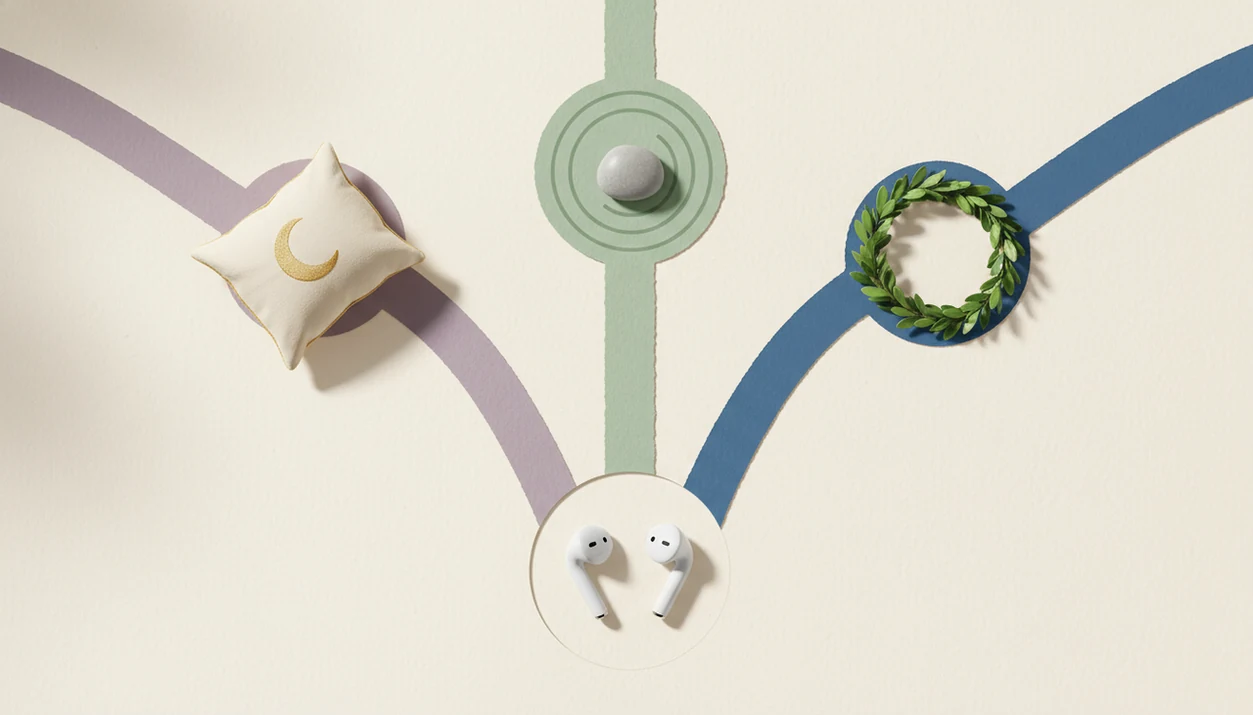
Image suggestion caption: “A meditation technique picker matching sleep, anxiety, and everyday calm goals to guided audio categories.”
Best Meditation Technique for Racing Thoughts, Panic, Tension, and Low Mood
If you are asking which meditation technique should I use, choose by problem before personality. Racing thoughts at bedtime usually fit body scan first, with sleep stories as the backup if silence feels too open. For thoughts that keep returning at bedtime, letting go mindfulness offers another way to relate to mental activity.
Middle-of-the-night waking often needs something less effortful. Try calming self-hypnosis or a quiet guided sleep track. If daytime panic rises fast, start with guided breathing; use grounding meditation techniques if breath focus feels uncomfortable.
Constant tension often responds well to progressive muscle relaxation, with body scan as the backup. Low mood may fit loving-kindness first, then mantra if emotional phrases feel too direct. If you cannot focus at all, use a short voice-led session before trying silent mindfulness.
Test one technique for several sessions before switching. Severe, persistent, or frightening symptoms deserve support from a qualified professional, not just a new audio track.
Meditation Technique Choice in the Nervous System
Meditation techniques differ mainly by attentional target: breath, body sensations, words, imagery, sound, or compassion phrases. That target matters because attention and arousal tend to move together.
Sleep practices usually shift attention away from planning and into physical relaxation. A body scan asks you to notice the jaw, shoulders, belly, legs, and feet. Progressive relaxation adds muscle release. On nights when feet keep searching for a cool sheet, that physical focus can feel more usable than “clear your mind.”
Breathing and mindfulness practices reduce arousal by giving attention a stable anchor. In plain language, the anchor gives the mind a place to land. Guided audio can help beginners because silence may feel like too much space too soon.
A 2018 systematic review found small-to-moderate benefits from smartphone-based mindfulness and meditation apps for stress, depression, and anxiety. Evidence supports broad categories, not every individual track or style.
5-Step Meditation Technique Picker for Sleep, Anxiety, Focus, and Everyday Calm
Use this 5-step meditation technique picker when the app library feels too full. It helps you choose a starting point without scrolling past twenty tracks.
- Name the main goal: Choose sleep, anxiety, focus, emotional reset, or everyday calm before choosing a technique.
- Set the time window: Pick 3 minutes, 5-10 minutes, 10-20 minutes, or a longer bedtime session.
- Choose the support level: Decide whether you want voice-led, music-backed, silent, or hypnosis-style guidance.
- Match the technique to the moment: Use bedtime audio at night, breathing during a work break, grounding during a panic spike, or a short reset in the morning.
- Repeat for 7 days: Adjust only one variable at a time, such as length, voice, or technique.
For beginners, a 5-minute guided session is often easier than silent meditation because it removes the guesswork. A phone with guided audio on the desk, volume low, can be enough to begin.
Meditation Technique Quiz Criteria for Goal, Time, Attention, and Silence
A useful meditation technique quiz asks about your goal, time, attention span, silence tolerance, sound sensitivity, experience level, and current state. It should not pretend one answer fits every mood.
- Goal: Sleep, anxiety support, focus, emotional reset, and everyday calm need different anchors.
- Time available: A 3-minute reset is not a failed 20-minute practice; it is a different tool.
- Attention span: A beginner with racing thoughts may do better with guided audio than silent mindfulness.
- Silence tolerance: Some people settle with quiet; others need voice, music, or a simple soundscape.
- Current state: A sleepy user may need body-based relaxation rather than analytical reflection. The HALT mindfulness practice can help you notice hunger, anger, loneliness, or tiredness before choosing a session.
Per the CDC, 14.2% of U.S. adults reported meditating in the past 12 months in 2017 (CDC/NCHS source), which shows how mainstream the practice has become. If you want a broader overview, our meditation techniques library explains the main styles in plain language.
Best-for and Not-for Matches for Body Scan, Guided Breathing, and Loving-Kindness
These five techniques cover most starting points. Choose the one that feels manageable enough to repeat, not the one that sounds most impressive.
- Body scan: Best for sleep, bedtime tension, and people who like step-by-step body cues. Not ideal if body focus feels unsafe, triggering, or too intense.
- Guided breathing: Best for anxiety spikes, workday calm breaks, and short resets before opening messages. Not ideal if breath focus increases discomfort or air hunger.
- Mindfulness of breath: Best for building steady attention over time. Not ideal when silence makes thoughts feel louder at the start.
- Loving-kindness: Best for emotional resilience, self-criticism, and softening toward others. Not ideal if phrases feel forced; loving-kindness meditation for beginners can help you start smaller.
- Self-hypnosis or sleep stories: Best for bedtime and low-effort listening. Not ideal when you need alert focus.
Loving-kindness usually works best when emotional warmth feels accessible, while mantra fits people who prefer one repeated word or phrase. When comparison or envy is prominent, mindfulness for jealousy offers a more specific focus than general compassion practice.
When sitting still makes attention harder
Movement-based meditation is another option when seated practice brings restlessness or drowsiness. In a 2025 comparison involving novice meditators, kinetic meditation produced greater focused attention than static meditation and appeared to reduce drowsiness. That finding supports considering movement, but it does not establish walking or yoga-based mindfulness as the best technique for everyone or for every goal.
For an everyday attention practice, a short walk can use the sensation of each step as the focus instead of the breath. Choose a clear, familiar space, keep eyes open, and let attention return to foot contact when thoughts pull it away. Gentle movement is an alternative to forcing a motionless session, not a requirement. For falling asleep, the less active options in the picker may be a closer fit.
MindTastik Audio Category Match for Sleep, Anxiety Relief, and Everyday Calm
MindTastik offers guided meditation, sleep audio, breathing exercises, and self-hypnosis sessions for adults seeking support with rest, anxiety, and everyday calm. The practical value is category matching: choose the shelf before choosing the track.
The Sleep category fits body scan, progressive muscle relaxation, sleep stories, soundscapes, and self-hypnosis. If muscle release is your main need, progressive muscle relaxation for sleep is often a clearer starting point than open-ended mindfulness.
The Anxiety Relief category fits breathing exercises, grounding meditations, short guided practices, and calming voice-led sessions. The Everyday Calm category fits mindfulness, mantra, loving-kindness, and short reset sessions.
Tools like MindTastik, Calm, Headspace, and Mindful can support practice, but care decisions belong with qualified professionals.
Evidence Behind App-Based Meditation, Mindfulness, and Sleep Relaxation
Research supports meditation as a helpful practice for some people, but the evidence is stronger for broad approaches than for every branded technique. Clinicians typically recommend professional care for severe anxiety, depression, trauma, suicidal thoughts, or chronic insomnia.
- A 2019 randomized controlled trial found that an 8-week app-based meditation program improved sleep quality and reduced insomnia symptoms in adults with sleep disturbance JAMA Internal Medicine study: 2755485.
- A 2014 mindfulness meta-analysis found moderate anxiety reductions, with effect sizes around 0.5 compared with control conditions.
- A 2015 trial in chronic insomnia found mindfulness-based stress reduction was associated with improvements in several sleep outcomes.
- A 2018 review of smartphone mindfulness and meditation apps found small-to-moderate benefits for stress, depression, and anxiety.
- Evidence is strongest for mindfulness, app-based meditation, and sleep-focused relaxation, not every hypnosis, mantra, or soundscape format.
The most common medically supported way to use meditation for stress is regular practice combined with appropriate professional support when symptoms are severe.
Turning a technique choice into guided audio
MindTastik’s guided meditation library suits adults who want spoken instructions rather than an unstructured silent session. Its breathing exercises offer a starting point for short calm breaks, while sleep stories and self-hypnosis audio provide alternatives for bedtime. Someone who prefers silence or movement may find an audio library less useful. Persistent insomnia, severe anxiety, or distress that increases during practice calls for professional support, not simply a different track. MindTastik is not a medical treatment.
When choosing a different meditation is not enough
Meditation can be useful, but it has real boundaries. Someone who says they need a calming track when mental chatter feels overwhelming may still need support beyond audio.
- Meditation is not a substitute for professional care for severe anxiety, depression, trauma, suicidal thoughts, or chronic insomnia.
- Some people feel worse with long silent sits, breath focus, or intense body scanning.
- Benefits often require repeated practice over weeks, not one impressive session.
- Research is stronger for mindfulness, app-based meditation, and relaxation than for specific hypnosis, mantra, or soundscape formats.
- Stop or switch techniques if a practice increases panic, dissociation, distress, or a sense of being trapped.
- App-based meditation can support care, but it should not replace prescribed treatment or therapy.
- A calming voice may help one person and irritate another. That is useful information, not failure.
Small adjustments matter.
If bedtime audio keeps you awake, lower the screen brightness, shorten the session, or choose a less verbal track.
When to Seek Professional Help
Seek professional help when symptoms feel severe, persistent, unsafe, or bigger than a meditation choice. Meditation can support care, but it cannot diagnose anxiety, depression, trauma symptoms, suicidal thoughts, or chronic insomnia, and it should not replace treatment.
Use meditation as one part of a wider support plan when needed. If a practice makes panic sharper, increases dissociation, brings up trauma material too quickly, or leaves you more distressed, stop that session and choose safety over completion.
- Pause the practice: Turn off the audio, open your eyes, look around the room, and return to simple grounding. A mindful pause can create space to notice your current state before deciding whether to continue practicing.
- Name what changed: Notice whether panic, numbness, despair, intrusive memories, or sleeplessness has intensified.
- Contact support: Reach out to a licensed therapist, physician, psychiatrist, or sleep specialist if symptoms keep returning or interfere with daily life.
- Use urgent help: If you might harm yourself, cannot stay safe, or feel out of control, contact crisis resources, call emergency services, or go to the nearest emergency department.
- Resume gently: Return to meditation only when it feels stabilizing, brief, and compatible with your care plan.
When you want app-based guidance rather than reading steps alone, MindTastik guided meditation app collects the core guided library in one place.
Meditation technique questions
Which meditation technique should I use as a beginner?
Start with the goal rather than a personality label. A short guided session offers structure for everyday calm; body scan or progressive muscle relaxation fits bedtime tension. If breath or body focus feels uncomfortable, consider an external grounding focus instead. The first choice is a starting point, not a commitment to one method.
What meditation should I try for racing thoughts at night?
A body scan gives attention a sequence of physical sensations to follow, while progressive muscle relaxation adds deliberate muscle release. If those cues feel too intense or require too much effort, a quiet sleep story offers another focus. None guarantees sleep, and persistent insomnia needs assessment rather than endless changes of audio.
What if focusing on my breath makes anxiety worse?
Stop the breath-focused exercise rather than trying to complete it. Open the eyes and shift attention to the room, sounds, or contact with the chair or floor. Grounding may be more manageable than monitoring breathing. If panic becomes stronger, distress persists, or practice feels unsafe, seek professional support.
Can I meditate while walking instead of sitting still?
Yes. Walking or gentle movement can provide an attention target when sitting brings restlessness or sleepiness. A comparison in novice meditators favored movement over static practice for focused attention, but that does not prove broader health benefits. Keep eyes open and use a clear space where attention to surroundings remains possible.
How do I know when to switch meditation techniques?
Switch when the attention target or format repeatedly feels unsuitable, such as breath focus increasing discomfort or silence making practice harder to follow. For a tolerable session, consider repeating it before judging the fit. Compare comfort, willingness to repeat, and the intended goal. Increased panic, dissociation, or distress is a reason to stop, not persevere.
Does calming music count as meditation?
Music can accompany meditation or serve as a separate relaxation aid. Research on music interventions suggests possible sleep benefits, but that is not the same as evidence for meditation itself. No particular genre or frequency is established here as uniquely therapeutic. Choose music as optional support, not as treatment for persistent insomnia.