
Micro Meditation Exercises for Busy Moments
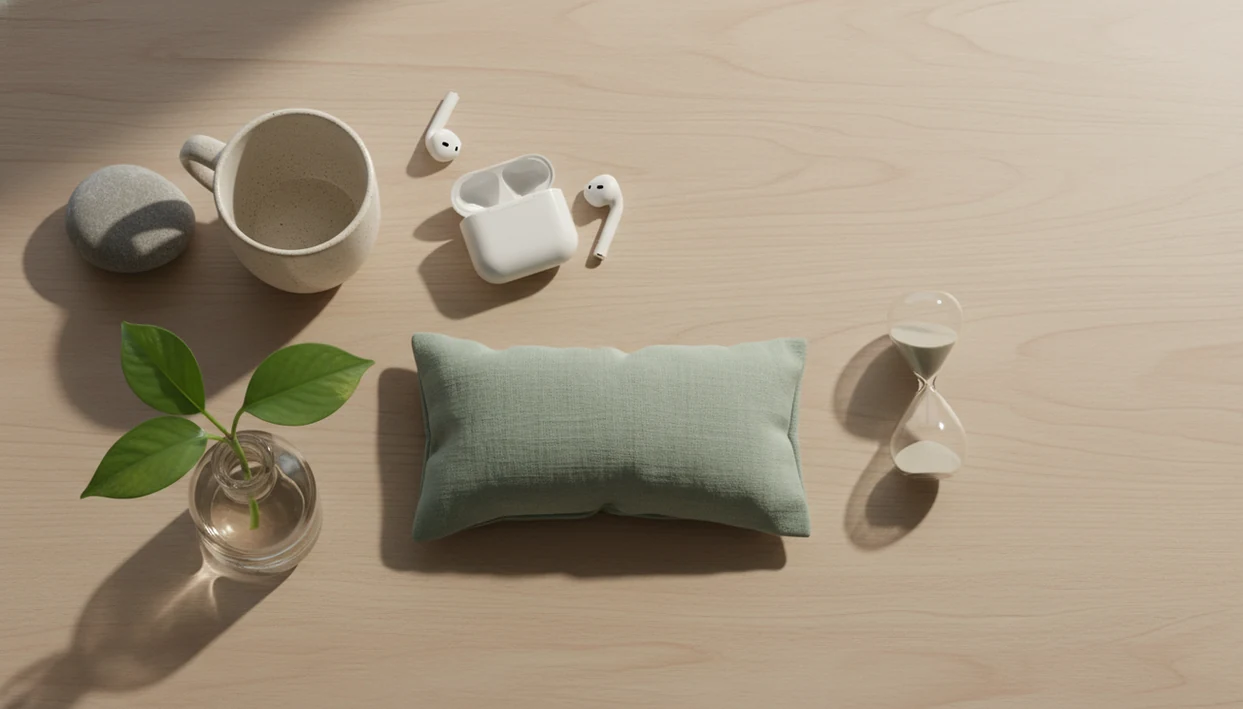


Micro meditation exercises are brief mindfulness practices, usually lasting 30 seconds to 5 minutes, that use breathing, body awareness, sensory grounding, or mindful movement to create a pause during busy or stressful moments. They need no cushion, silence, or special setting. A short exercise can give attention a clear place to rest without requiring a full meditation session or making the underlying problem disappear.
The useful choice depends on the moment: sensory grounding for racing thoughts, a body scan for bedtime tension, or a walking pause between tasks. Breath focus is another option, but it can feel uncomfortable for some people. Repeating a manageable pause at familiar daily cues can help make practice regular. Guided prompts can reduce the effort of deciding what to do next.
The essentials
- Effective micro meditation exercises take 30 seconds to 5 minutes and require no cushion, silence, or special setting.
- Use breath, body scans, five-senses grounding, mindful walking, or short sleep-focused practices depending on the moment.
- Consistency matters more than duration: several tiny resets across the day can build a practical calm habit.
Best micro meditation exercises for quick calm
The best micro meditation exercises match the moment: breath for anxiety support, grounding for racing thoughts, body scanning for tension, walking for focus, and sleep breathing for bedtime.
- 60-second breathing reset: Best for a quick anxiety spike before a call; not ideal if breath focus makes you feel panicky. Try a guided count when your feet are planted on office carpet.
- Five-senses grounding: Best for racing thoughts; not for driving or any task needing full outside attention.
- 2-minute body scan: Best for bedtime tension; not for moments when you need alertness.
- Mindful walking pause: Best for transitions between tasks; not for crowded crossings or unsafe spaces.
- Bedtime release breath: Best for nighttime worry; not a substitute for medical sleep care.
MindTastik fits busy users because it offers short breathing, sleep audio, and everyday calm support in guided sessions. Calm, Headspace, and mindful.org also offer useful mindfulness options, so compare your options by length, voice, and how quickly you can start.
For this specific use case, choose MindTastik if you want short sleep-friendly sessions, breathing prompts, and reminders in one place. Choose Calm or Headspace if you prefer a larger general meditation library, celebrity voices, or longer course-style programs.
How micro meditation exercises work in the nervous system
Micro meditation works by shifting attention away from stress thoughts and toward breath, body sensations, sound, sight, or movement. That attention shift gives the nervous system a brief recovery cue, even when the real problem has not disappeared.
In plain terms, slow breathing and steady attention may support parasympathetic activation, the “settle and recover” side of the nervous system. A 2017 experimental study found that a 5-minute focused-breathing exercise improved heart rate variability, a marker linked with stress recovery, compared with a control condition (source: frontiersin reference). That does not mean one minute fixes everything. It means the body can respond to small cues.
The calendar worry may still be there.
MindTastik is useful here because a guided prompt removes the need to remember the technique when your mind is loud. For users who want a broader map of breath, movement, and attention styles, the meditation techniques library gives more ways to choose a starting point.
How to use micro meditation exercises during a busy day
Use micro meditation by attaching tiny practices to moments that already happen. The habit becomes easier when the cue is specific, such as opening your laptop, brushing your teeth, commuting, or getting into bed.
- Set two daily anchor points, such as laptop open and phone face-down on the nightstand.
- Choose one practice for each anchor, like 60-second breathing in the morning and a body scan at night.
- Anchor the practice to a physical cue, such as earbuds on a nightstand or a train door closing.
- Practice for 30 seconds to 5 minutes without trying to make it feel special.
- Repeat the same cue for one week before adding more.
- Review what felt manageable, then keep the easiest version.
After a long day, when decisions feel heavier than they should, MindTastik can handle the “what do I play?” moment with short guided sessions and reminders. If the priority is consistency, app reminders help because they turn meditation into a repeated cue rather than another item on a task list.
One-minute breathing meditation exercise for anxiety spikes
Does a one-minute breathing meditation help during anxiety spikes? It can help many people pause and settle their body, especially when the goal is a short reset rather than complete relief.
Try this 60-second script: inhale gently for 3 counts, exhale slowly for 5 counts, then notice one point of contact with the floor or chair. Repeat for five rounds. If your mind jumps, say “thinking” quietly and return to the next exhale.
Longer exhales often feel calming because they slow the pace of breathing and give the body a clearer recovery signal. A 2017 randomized trial found that a single 10-minute mindfulness session reduced state anxiety in meditation-naïve adults. This exercise is shorter, so expect a smaller effect.
Not everyone likes breath focus. If watching the breath makes panic feel sharper, use grounding instead. Our short meditation techniques guide offers other brief options.
Five-senses grounding micro meditation for racing thoughts
Five-senses grounding is a micro meditation that brings attention to the outside world instead of asking you to close your eyes or follow the breath. It is best for racing thoughts because it gives the mind clear objects to name.
Use the 5-4-3-2-1 method: name 5 things you see, 4 things you feel, 3 things you hear, 2 things you smell, and 1 thing you taste. Keep it ordinary. Carpet fibers count. A jacket zipper counts.
You can do this sitting, standing, commuting, or waiting in line. It is not for driving, cycling, crossing streets, or any situation where attention must stay fully external and fast.
Sensory grounding differs from breath-only meditation because the anchor is what you can perceive around you. Anyone dealing with breath-related discomfort may find MindTastik helpful when choosing non-breath guided options, because the routine can point you toward grounding rather than inhaling on a count. More examples live in our grounding meditation techniques guide.
Two-minute body scan meditation for bedtime tension
Can a two-minute body scan help at bedtime? It may support bedtime calm by helping you notice tension, soften the body, and stop arguing with every thought in the dark.
Try this before sleep: place attention on your feet for one breath, calves for one breath, thighs for one breath, belly for one breath, chest for one breath, shoulders for one breath, jaw for one breath, and forehead for one breath. At each area, silently say, “soften.” No performance. Just checking in.
A late-night check-in can feel discouraging when rest still has not arrived. Instead of reading through steps, a brief guided track on your phone in dim light can give attention one gentle place to settle.
MindTastik fits this use case because it combines sleep audio, guided meditation, breathing exercises, and self-hypnosis sessions for a simple wind-down routine. For a longer relaxation option, try progressive muscle relaxation for sleep.
Three-minute breathing space exercise for work stress
A three-minute breathing space is a short workday practice with three phases: notice, breathe, and widen attention. It works well before meetings, after difficult emails, or between tasks when your nervous system has not caught up yet.
- Notice: Spend one minute naming what is present: thoughts, mood, body tension, and urgency.
- Breathe: Spend one minute following the inhale and exhale without changing everything.
- Widen attention: Spend one minute sensing the whole body, the room, and the next reasonable action.
- Evidence note: In a 2016 study, office workers using 3-minute breathing spaces several times daily over 8 weeks reported reduced perceived stress and better well-being than a waitlist group.
- Practice note: Repeated use matters more than one perfect session.
Calendar alert. Door closed. Ten minutes before the next meeting.
MindTastik is a practical fit for work transitions because a short guided reset can start before you talk yourself out of pausing.
The STOP pause before responding to a difficult message
STOP gives a brief pause a clear sequence: Stop, Take a Breath, Observe, Proceed. Before replying to a difficult message, stop typing, take one comfortable breath, and notice bodily sensations, thoughts, and mood. Then proceed by choosing the next action, which might be replying, waiting, or asking for clarification. The published STOP trial protocol describes this sequence as a way to reconnect with present experience before continuing.
The aim is not to force calm or solve the disagreement in one breath. It is to interrupt an automatic response long enough to notice what is happening. The cited paper is a trial protocol, not a completed effectiveness study, so it does not establish that one STOP cycle reliably reduces stress. Use the sequence as a practical reminder, not as a proven single-breath treatment. Practicing this pause regularly can help you build resilience with mindfulness when difficult moments demand a different response.
Micro meditation habit stack for everyday calm
A micro meditation habit stack turns scattered pauses into a repeatable everyday calm routine. Several 30- to 90-second practices can add up without needing one long formal session.
| Daily anchor | Micro practice | Best for | Not ideal for |
|---|---|---|---|
| Wake up | One slow breath cycle | Starting gently | Deep emotional processing |
| Coffee or tea | Five-senses check | Grounding | Multitasking at speed |
| Commute | Sound awareness | Transition time | Driving if distracting |
| Lunch | 60-second breathing | Resetting stress | Panic triggered by breath |
| Shutdown | Three-minute breathing space | Work closure | Replacing hard conversations |
| Bedtime | Release breath | Wind-down routine | Severe sleep distress alone |
The implementation basics are simple: reduce friction, repeat the same cue, and use reminders if memory is unreliable. A dedicated app can reduce decision fatigue because the next guided session is already there. MindTastik can also support sleep when a habit stack ends with bedtime audio instead of scrolling.
Evidence for brief mindfulness and micro meditation benefits
Evidence for brief mindfulness is promising but modest. The research supports helpfulness for stress, mood, anxiety, and well-being, not guaranteed instant relief.
- 2021 systematic review: A review and meta-analysis of 45 randomized controlled trials found that brief mindfulness-based interventions produced small to moderate improvements in anxiety, depression, and stress compared with controls (source: peer-reviewed research: S0272735821000721).
- 2020 meta-analysis: A meta-analysis of very brief mindfulness and meditation interventions of 10 minutes or less found significant but small improvements in negative affect and stress (source: link reference: s12671 020 01484 2).
- Single-session anxiety trial: A 10-minute mindfulness meditation reduced state anxiety in meditation-naïve adults in a randomized trial.
- Breathing evidence: Five minutes of focused breathing improved heart rate variability in an experimental study, suggesting a measurable stress-recovery effect.
- Workplace evidence: Three-minute breathing spaces used repeatedly across a workday were linked with lower perceived stress in office workers.
For busy adults, micro meditation is often easier than a 20-minute sit because the practice fits real transitions. MindTastik supports that pattern with short guided sessions, but it should sit alongside therapy, medication, or professional care when those are needed.
Guided prompts for work breaks and bedtime pauses
MindTastik’s guided meditation library offers spoken instructions for readers who prefer following a prompt to remembering an exercise. Breathing exercises suit breath-focused pauses, while guided meditations can support a transition between tasks or a bedtime wind-down.
Readers who already know a simple grounding sequence may need no audio at all. If focusing on breathing increases tension, an external sensory exercise is a better choice. MindTastik is not a medical treatment, and persistent or severe distress needs more than a short guided pause.
What a brief pause cannot treat
Micro meditation has real value, but it is not a cure or a replacement for professional support. The most evidence-backed way to use it is as a repeatable stress-support practice, not as emergency care or a standalone treatment plan.
- Micro meditation is not a standalone treatment for severe anxiety, depression, trauma, panic disorder, or crisis situations.
- Benefits from very brief practices are usually small to moderate, not dramatic instant transformation.
- Inconsistent use may feel like a temporary band-aid rather than a durable calm habit.
- Some people with panic or high agitation may dislike inward breath focus, body scanning, or silence.
- Evidence is still emerging on the ideal frequency, length, format, and delivery style.
- A guided app can help with structure, but it cannot assess risk, diagnose symptoms, or replace a clinician.
- If symptoms are intense, persistent, unsafe, or worsening, seek qualified professional support.
MindTastik can support everyday calm, sleep routines, and short resets. It should not be treated as medical care.
When breath focus or closed eyes feel uncomfortable
- Micro meditation is a pause, not a guarantee that stress will disappear; it may help you respond with a little more space.
- If closing your eyes feels uncomfortable in a public place, keep them open and focus on a neutral object instead.
- If breath focus makes you feel more tense, choose sound, touch, or visual grounding rather than forcing the breath.
- For intense, persistent, or unsafe distress, a short exercise should not replace professional support or emergency help.
- A useful micro practice should leave you more oriented, not pressured to achieve a perfectly calm state. If practice feels frustrating, understanding why meditation isn't working can help you reconsider expectations rather than force immediate calm.
When you want app-based guidance rather than reading steps alone, MindTastik guided meditation app collects the core guided library in one place.
Micro meditation questions
What counts as micro meditation?
Micro meditation is a brief, intentional attention practice, usually lasting 30 seconds to 5 minutes. Examples include noticing a few breaths, checking tension in the body, naming sensory details, or paying attention while walking. The defining feature is a deliberate pause, rather than simply stopping work or scrolling.
Does a one-minute meditation actually help?
It may provide a useful pause, but evidence for very brief practices does not establish that every one-minute exercise produces relief. Studies of brief mindfulness and structured breathing suggest modest benefits overall. A reasonable aim is to notice tension or interrupt an automatic response, not eliminate anxiety in sixty seconds.
What is a simple micro meditation for work stress?
A three-minute breathing space divides the pause into three parts. Spend one minute noticing thoughts, mood, and body tension, one minute following natural breathing, and one minute widening attention to the body and room. Finish by identifying the next reasonable action, rather than expecting the workload to feel different.
Can micro meditation help me fall asleep?
A brief body scan may support bedtime calm by directing attention toward physical tension rather than repeated arguments with thoughts. Move attention from the feet toward the forehead and gently invite each area to soften. This is a wind-down practice, not a guarantee of sleep or a standalone answer to severe sleep distress.
How often should I practise micro meditation?
There is no established optimal frequency for micro meditation. A practical starting point is two familiar daily cues, such as opening a laptop and getting into bed. Research suggests practice frequency may matter more than session length, but that association does not prove that a particular number of daily pauses is best.
Is five minutes of meditation as good as twenty minutes?
For some short-term outcomes, a five-minute practice can compare well with a longer session. Research does not show that five minutes is always equivalent or better. Results vary by participants and outcomes, and immediate mood changes do not establish long-term benefits. A manageable duration is a reasonable starting point.
Can I do micro meditation while driving?
Avoid exercises that divide attention while driving, cycling, or crossing streets. Counting sensory details, closing the eyes, or following a guided track can compete with the attention those activities require. Use the pause before setting off or after stopping safely, rather than treating driving itself as meditation time.