
Mindfulness and Boredom: How to Turn Restlessness Into Practice
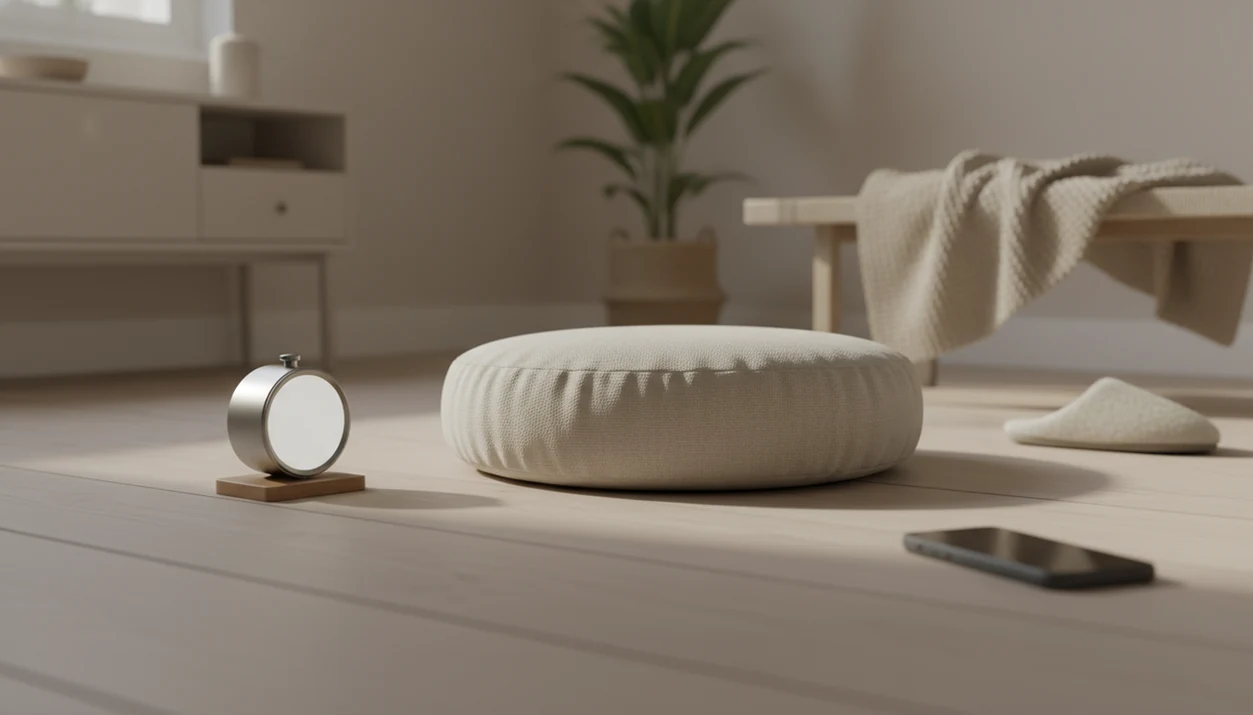


Mindfulness and boredom means noticing the restless feeling that nothing is happening instead of immediately escaping it. Mindfulness is attention to the present moment, on purpose and without immediate judgment; boredom is the wish for more stimulation, novelty, or meaning. During meditation, that wish can become something to observe: a thought, tension in the body, or an urge to check the timer.
Boredom does not mean meditation has failed. A short guided practice can give beginners a clear task, such as returning to breath, body sensations, or sound. The feeling can also point to fatigue, stress, distraction, sleep debt, or a practice that does not suit the moment. Observing boredom is useful, but so is recognizing when rest or a different activity is needed.
The essentials
- Boredom during meditation is common and does not mean you are bad at mindfulness.
- Short guided practices can make boredom easier to stay with, especially for beginners.
- Boredom can reveal fatigue, stress, distraction, sleep debt, or a mismatch between your practice and your current mental state.
Mindfulness and boredom in plain terms
Mindfulness and boredom meet when you notice “I’m bored” and stay curious before reacting. Boredom is usually low stimulation plus restlessness, not laziness or a weak attention span.
In practice, boredom can feel like checking the timer, wanting a different sound, or suddenly remembering three errands. Mindfulness asks you to observe that whole chain. You notice the thought, the body tension, the urge to quit, and the mood underneath it.
It may not feel peaceful.
Mindfulness does not make boredom disappear on command. It gives you a small pause between the bored feeling and the automatic escape, such as scrolling, snacking, or abandoning the session. If you are new, a short guide from meditation techniques for beginners can make that pause easier to practice.
Five mindfulness and boredom facts beginners should know
- Boredom is not empty space. It is often a mix of understimulation, restlessness, and the mind’s wish for more meaning or novelty. A meditation for happiness offers another way to reflect on contentment without expecting every moment to feel stimulating.
- Boredom during meditation is normal. It does not mean the practice failed, even if your knees are tucked under a throw blanket and you keep shifting around.
- Mindfulness changes your relationship to boredom. It helps you notice boredom without immediately obeying it.
- A few minutes can be enough. Breath awareness, body sensations, or listening to room sounds can make boredom more workable.
- Boredom can be useful feedback. It may point to fatigue, stress, distraction, posture discomfort, or a practice style that does not fit today. For a closer look at what feels missing, try mindfulness questions for self-discovery before choosing your next practice.
For beginners, short mindfulness practice is often easier than long silent sitting because it lowers the chance of fighting boredom before attention has warmed up.
How mindfulness and boredom work in the attention system
The mind constantly scans for novelty, stimulation, and meaning. When a task feels too flat, the attention system starts looking elsewhere: phone, memory, worry, noise, plan, snack, anything with more charge.
One simple way to understand boredom is as a gap between the stimulation your brain expects and the stimulation the moment provides. Mindfulness does not fill that gap with entertainment; it trains you to feel the gap without immediately grabbing the nearest escape.
Mindfulness interrupts that automatic reaction loop. Instead of “bored, leave,” the sequence becomes “bored, notice, feel, choose.” That is attention training in plain language. You might follow the breath, feel pressure in the feet, or listen to the hum of a refrigerator without needing it to be interesting.
Small reps count.
Research on mindfulness generally supports modest average mental health benefits, not instant transformation. Clinicians typically recommend mindfulness as a supportive practice, not as a replacement for therapy, medication, sleep care, or emergency help. A bored five-minute sit after a long screen day may still be useful, but it is not magic.
Boredom and mind wandering are not the same thing
Boredom is the restless wish for something different; mind wandering is attention shifting away from the current activity. The distinction matters because a drifting thought does not automatically mean a practice is failing. A 2022 experiment on mindfulness and mind wandering found a moderate negative association in one testing condition but not another. The researchers treated them as related dimensions of attention, not interchangeable measures.
Nor does every wandering thought need to be stopped. An experience-sampling study of future-oriented thought found that much of the reported mind wandering concerned anticipating and planning future events. During boredom practice, labeling a thought as “planning” can clarify the next choice: return to the chosen anchor, or end the practice and address a useful task. The aim is deliberate attention, not a mind with no thoughts. When recurring thoughts concern a past experience, a meditation for moving on can offer a focused way to practice letting go.
Before You Practice Mindfulness With Boredom
Before practicing with boredom, make the moment small, safe, and specific. This is not the exercise to start during panic, a crisis, or a moment when you feel unable to stay grounded.
- Choose a low-stakes pocket of time, such as waiting for tea, sitting before work, or lying in bed before reaching for your phone.
- Set a timer for two to five minutes so you are not negotiating with the clock the whole time.
- Pick one simple anchor before you begin: breath, feet, sound, hands, or room temperature. Stay with one instead of shopping for the perfect object.
- Adjust obvious discomfort first. Change painful posture, harsh lighting, cold air, heat, or tight clothing before deciding the problem is boredom.
- Stop if the boredom turns hopeless, unsafe, or overwhelming. Open your eyes, move, contact someone you trust, or seek professional support if the feeling is intense or persistent.
The goal is not to prove you can endure anything. It is to create a clean enough container that boredom can be observed without becoming a fight.
How to use mindfulness and boredom as a practice cue
Use boredom as a cue to begin a short reset, not as proof you should quit. Keep the whole practice between two and five minutes when restlessness is strong.
- Notice the first bored signal, such as timer-checking, sighing, or reaching for your phone.
- Name it quietly: “boredom is here,” “restlessness is here,” or “wanting more is here.”
- Feel one body anchor, such as feet on the floor, palms on your thighs, or breath at the ribs.
- Breathe for five slow cycles without trying to create a special state.
- Choose one next action: continue, stand up, stretch, start work, or begin a wind-down routine.
- Reset without drama if you got distracted. Return once, then end cleanly.
The most useful boredom practice usually works when it is short, specific, and followed by one practical next step.
Mindfulness and boredom tips for meditation sessions
- The shorter-session tip: Use two to five minutes when boredom is loud. A 20-minute sit can wait until the habit feels less brittle.
- The attention-swap tip: Move from breath to body, sound, walking, or a simple phrase. Our short meditation techniques guide can help when sitting still feels like too much.
- The posture-check tip: Adjust your seat, lighting, or room temperature if boredom is really fatigue in disguise.
- The guided-session tip: Try narration when silent practice feels too open-ended.
- The beginner-normalizing tip: Restlessness is part of learning. The user who says, “I just need something to play when my thoughts get loud,” is not doing it wrong.
Best mindfulness and boredom practices for different moments
Different kinds of boredom need different anchors. Match the practice to the moment instead of forcing one method every time.
| Moment | Practice to try | Best for | Not ideal for |
|---|---|---|---|
| Boredom at home | Five-sense grounding | Getting out of autopilot | Deep emotional processing |
| Boredom at work | Three-minute breath reset | Returning after interruptions | Solving workload problems |
| Bedtime boredom | Sleep audio or body scan | Replacing scrolling | Treating insomnia |
| Anxious boredom | Longer exhale breathing | Settling agitation | Crisis-level distress |
| Meditation boredom | Sound awareness | Staying present without forcing breath focus | Severe exhaustion |
Tools like MindTastik, Calm, and Headspace can reduce friction by offering short guided meditation, sleep audio, breathing exercises, and self-hypnosis options. If boredom feels physical and scattered, grounding meditation techniques may fit better than silence.
Mindfulness and boredom guide for sleep, anxiety, and focus
Evening boredom can easily slide into scrolling, rumination, or delaying sleep. In a quiet room under dim light, the phone may start to feel like a scoreboard: awake again, searching again, hoping for one more spark of stimulation.
Anxious boredom can feel more charged. It may show up as pacing, agitation, or the sense that you should be doing something, even when nothing urgent is happening. For focus, a short reset helps rebuild attention after pings, tabs, and conversations break the thread.
Guided meditation, sleep audio, breathing exercises, and self-hypnosis sessions can support a boredom-aware routine for adults who want sleep, anxiety, and everyday calm support. MindTastik can be one option for that routine, but it is not medical care or therapy.
What research says about mindfulness and boredom
Research suggests boredom matters, but it should not be treated as a diagnosis by itself. A 2021 systematic review found boredom proneness was consistently associated with worse mental health outcomes, including higher anxiety and depression symptoms across studies (source: doi reference: j.cpr.2021.102039).
Mindfulness evidence is more measured than many headlines suggest. A 2022 meta-analysis of 14 studies found small but significant reductions in anxiety symptoms, with an effect size around g = -0.35, and depressive symptoms, around g = -0.30 (source: doi reference: j.jad.2022.04.071). A 2019 meta-analysis of 64 randomized controlled trials found mindfulness meditation programs were linked with small-to-moderate improvements in anxiety symptoms and small improvements in depression symptoms (source: doi reference: j.cpr.2018.10.011).
That is helpful, not dramatic.
Mindfulness may help people notice restlessness earlier and choose how to respond, but it is not a cure for boredom. It should not be sold as an instant fix for chronic boredom, anxiety, depression, or sleep problems.
When to Get Help for Persistent Boredom
Get help when boredom feels persistent, heavy, or starts narrowing your life instead of passing with rest, movement, connection, or a change of task. Chronic boredom can overlap with depression, ADHD, burnout, insomnia, anxiety, or other sleep problems, so it is worth taking seriously.
Mindfulness can support care by helping you notice patterns sooner, but it should not delay care when symptoms are lasting, worsening, or unsafe. Watch for warning signs such as hopelessness, pulling away from people, panic, major sleep disruption, feeling unable to function, or thoughts of harming yourself or someone else.
- Track how long the boredom has lasted, what makes it better or worse, and whether sleep, mood, work, school, or relationships are affected.
- Contact a licensed clinician, therapist, primary care doctor, or psychiatrist if the pattern continues, intensifies, or comes with anxiety, depression, attention problems, or exhaustion.
- Tell someone you trust if you feel isolated, scared, or unsure whether you are safe.
- Seek immediate crisis support now if you might hurt yourself or someone else, cannot stay safe, or feel at risk of acting on unsafe thoughts. Call local emergency services or a crisis line in your country.
Common mindfulness and boredom mistakes
The first mistake is treating boredom as failure. If you feel bored during meditation, you have found something to observe. If boredom brings self-criticism, a self-kindness meditation can help you practice a gentler response to the difficulty.
Another mistake is forcing calm. That often adds a second problem: boredom plus frustration. Try noticing the urge to feel different instead. It is a cleaner practice.
Do not use mindfulness to avoid necessary life changes. If every evening feels flat because you are burned out, isolated, overscheduled, or sleep deprived, passive listening alone will not solve the wider pattern. A phone with guided audio can support the first pause, but the routine still needs real care behind it. If boredom reflects unresolved tension with someone, try a reconciliation meditation before deciding how to reconnect.
Avoid making sessions too long too soon. If silence feels harsh, use a guided body scan, walking practice, or progressive muscle relaxation for sleep instead.
Guided audio when silence feels too open-ended
MindTastik’s guided meditation library offers narration for moments when silent practice leaves too much room for timer-checking or switching techniques. Breath or body-focused sessions fit the task here: notice restlessness, then return to a clear anchor. Breathing exercises are another option when a simple instruction is easier to follow.
Audio is optional. Someone who finds narration distracting may prefer room sounds or walking. Persistent boredom linked with mood changes, exhaustion, or sleep problems needs attention beyond an app, which is not a medical treatment.
What mindfulness cannot fix about boredom
Mindfulness can help you relate to boredom differently, but it has real limits.
- Mindfulness is not a quick cure for chronic boredom.
- Average research benefits are modest rather than dramatic.
- It may not work equally well when boredom is driven by depression, ADHD, sleep deprivation, burnout, or high stress.
- Early practice can temporarily feel more boring, frustrating, or uncomfortable.
- Guided meditation may reduce friction, but it cannot fix poor sleep routines or life circumstances by itself.
- Mindfulness should not be used to ignore pain, panic, major mood changes, or unsafe situations.
- A meditation app is not a replacement for medical care, therapy, crisis support, or guidance from a qualified professional.
If boredom feels persistent, heavy, or tied to hopelessness, it is reasonable to ask for support beyond a meditation app.
If you are ready to move from tips to practice, MindTastik guided meditation app is where MindTastik keeps its guided meditation experience.
Questions about boredom during mindfulness
Why do I get bored during meditation?
Meditation offers less novelty than scrolling, conversation, or switching tasks, so the wish for stimulation can become noticeable. Boredom may also reflect fatigue, discomfort, stress, or an unsuitable practice. It does not by itself show that meditation is failing. Check those practical factors before trying to sit longer.
What should I focus on when meditation feels boring?
Choose one concrete anchor: feet touching the floor, hands resting, breath moving at the ribs, or a nearby sound. Notice the urge to change activities, then return to that anchor. Boredom itself can also be observed through its thoughts and body sensations, without trying to make it disappear.
How long should I meditate when I feel restless?
Two to five minutes is a practical starting point when restlessness is strong, not a scientifically established ideal duration. A short timer removes the need to keep deciding when to stop. At the end, choose deliberately between continuing, stretching, resting, or returning to a task.
Should I push through boredom or stop meditating?
Ordinary restlessness can be observed for a few breaths before deciding. Pain, panic, or feeling unable to stay grounded calls for a different response, not forced endurance. Adjust discomfort or stop the exercise. A shorter session or a different anchor may suit the moment better than more effort.
Are guided meditations better than silence for boredom?
A guided voice can provide a clear task when silence feels too open-ended, especially for beginners. That does not make guided practice universally better. Narration can also become distracting. The useful choice is the format that makes noticing and returning manageable, rather than the one that promises constant interest.
Can mindfulness help with scrolling out of boredom?
It can provide a pause before an automatic reach for the phone. Notice the urge, name the restlessness, and feel a body anchor for a few breaths before choosing what to do next. This is a practical exercise, not a guarantee that scrolling will stop or that its underlying causes will change.
Can boredom during meditation mean depression or ADHD?
Boredom alone is not a diagnosis. Persistent boredom can overlap with depression, ADHD, burnout, anxiety, or sleep problems. Professional help is appropriate when it comes with lasting mood changes, withdrawal, major sleep disruption, or difficulty functioning. Meditation should not delay assessment of symptoms that are worsening or affecting daily life.
Does mindfulness mean stopping all wandering thoughts?
No. The skill is noticing that attention has shifted and returning to the chosen activity or anchor. Mind wandering can include useful future planning, so its content and timing matter. During a short practice, labeling a thought “planning” or “remembering” can help distinguish noticing it from automatically following it.